Early in September, MEEZA signed the biggest contract in its history: a long-term lease of 8 MW of data-centre capacity, worth more than QR1bn, with an unnamed global hyperscaler. Less than six weeks later, S&P Global Ratings projected that data-centre capacity across the GCC will roughly triple to more than 3 GW within five years. For AI founders and corporate innovators in Qatar, these are not abstract infrastructure stories. Where compute sits shapes your latency, your answers on data residency, your cost base and the suppliers you can sell to. This piece sets out what has been announced, what it means in practice, and where the real limits are.
What has actually been announced
According to Gulf Times, the 8 MW lease will come from an upcoming MEEZA campus designed to support the hyperscaler's cloud and AI workloads. MEEZA CEO Mohammed Ali al-Ghaithani called it "the largest in MEEZA's history" and said the company is "on track to quadruple our current data centre capacity." The hyperscaler was not named.
DatacenterDynamics adds the financing context:
- A QAR 1.6bn (about USD 438m) credit agreement with Dukhan Bank funds a 44 MW build-out across three Qatar facilities: M-VAULT 6, M-VAULT 7 and M-VAULT 8.
- This follows earlier hyperscaler deals: a QAR 350m agreement in July 2026 to expand a facility by 4 MW, and a QAR 750m deal for 6 MW of additional capacity.
- MEEZA operates five of the 11 facilities listed in Qatar by DataCenterMap. DCD describes Qatar as a relatively small data-centre market.
This sits on top of public cloud regions that already exist. Google Cloud opened its Doha region in 2023 with three zones. Microsoft's Doha cloud region opened in 2022, and in June 2024 MCIT and Microsoft announced an expansion of it, reporting that 143 government and semi-government entities had migrated to Azure by then. The US International Trade Administration's Qatar commercial guide also notes an Ooredoo–Nvidia agreement to install Nvidia GPUs in Ooredoo's AI data centres to offer GPU-as-a-Service.
The regional picture, and its limits
The S&P outlook, reported by Gulf Times on 16 October, is bullish on the Gulf overall. Grid connections take 12 to 18 months here, compared with four to seven years in North America and Europe, and electricity tariffs in Saudi Arabia and the UAE run at USD 0.05–0.06 per kWh, against USD 0.09–0.15 in the US.
The same report is clear about the limits:
-
Scale is concentrated elsewhere. Saudi Arabia and the UAE are expected to account for more than 80% of GCC capacity additions through 2030. Qatar's build-out is significant for Qatar, but founders who need very large training clusters may still look to neighbouring markets or global regions.
-
Resilience costs money. S&P notes that damage to AWS data centres in the UAE and Bahrain during the regional conflict caused extended outages. It estimates that resilience measures such as site dispersion and hardened or underground construction could add 5–7% to capital costs.
-
Committed demand matters. S&P says projects backed by committed capacity to creditworthy counterparties offer better cash-flow visibility than speculative builds. That is why anchor leases like MEEZA's matter.
What local AI-ready capacity changes for startups
The following is general guidance on how founders can think about this shift, not a description of any specific provider's offering.
-
Data residency becomes easier to answer. Government entities and regulated buyers usually ask where their data will sit before they ask about anything else. Being able to say "in-country, on a major cloud platform" shortens procurement conversations. Qatar's rules still need reading carefully. ITA notes that the CRA's 2022 Cloud Policy Framework relaxed blanket local-storage requirements, while the 2016 personal data protection law and the 2023 National Data Classification Policy still apply. Check the classification of your client's data, not just the headline rule.
-
Latency-sensitive products get viable. Real-time voice AI, computer vision on live video, and Arabic-language assistants embedded in customer service all benefit when inference runs close to users.
-
Buy compute, don't build it. For almost every early-stage company, renting GPU capacity or managed AI services from a local region beats buying hardware. Treat compute as a variable cost tied to customer usage, and price your product with that link in mind.
-
Design for portability. Given S&P's point on outages, regulated customers will increasingly ask about failover. Containerised workloads and a documented multi-region or multi-provider fallback plan make a startup easier to buy from.
Where the supply-chain openings are
A 44 MW build-out and a quadrupling of one operator's capacity create demand beyond the data hall itself. Based on the trends S&P highlights, these areas deserve a look from founders and SMEs:
-
Cooling and water. S&P expects average rack density to rise from 16 kW in 2025 to 27 kW in 2026, and notes that liquid cooling can cut on-site water use by up to 91%. Thermal engineering, monitoring and maintenance services for high-density racks are a natural fit in a hot, water-scarce climate.
-
Energy efficiency and monitoring. Software that tracks power usage, predicts failures or optimises workload scheduling sells to operators and to their enterprise tenants.
-
Managed services and integration. With well over a hundred government and semi-government entities already on Azure alone, demand for migration, FinOps (cloud cost management) and AI-deployment partners extends to private-sector firms and SMEs following the same path.
-
Applied AI tooling. The opportunity for most startups is in what runs on the infrastructure: domain models, Arabic-language data pipelines, evaluation and compliance tooling for regulated sectors.
How this connects to Vision 2030 and the Digital Agenda
MEEZA has tied its expansion directly to Qatar National Vision 2030 and the Qatar Digital Agenda 2030. According to ITA's summary, the Digital Agenda, published in April 2024, targets about QAR 40bn added to non-hydrocarbon GDP and 26,000 additional ICT jobs by 2030. "Hypercomputing" and digital infrastructure are two of its six pillars, and Qatar aims to become a net exporter of digital services. The same guide notes Qatar's plan to double national cloud data-centre capacity. Under NDS3, which targets 4% annual growth in non-hydrocarbon GDP, digital infrastructure is a means to that end. The startups that turn this capacity into exportable products and services are the ones that move the dial.
What to do next
-
Map your data. List what customer data you hold, how it would be classified, and where it is processed today. Have a one-page residency answer ready for procurement.
-
Benchmark your local options. Compare latency, GPU availability and pricing between the Doha cloud regions and the regions you use now before your next customer asks.
-
Write a failover plan. Document how your service would keep running if one region or provider went down.
-
Look up the supply chain. If you are in cooling, energy, facilities or managed IT, track operators' build-out announcements and approach them and their contractors early.
-
Price compute into your model. Make sure gross margin holds up as inference volumes grow.
Sources
- GCC data centre capacity to triple to 3GW on AI demand, says S&P (16 Oct 2026) – Gulf Times – gulf-times.com
- MEEZA signs QR1bn data centre deal with global hyperscaler (Sep 2026) – Gulf Times – gulf-times.com
- Qatar's Meeza signs 8MW lease with global hyperscaler (Sep 2026) – DatacenterDynamics – datacenterdynamics.com
- New Google Cloud region now open in Qatar (2023) – Google Cloud – cloud.google.com
- MCIT teams up with Microsoft to expand cloud data centres (Jun 2024) – Qatar Tribune – qatar-tribune.com
- Qatar Country Commercial Guide: Digital Economy – US International Trade Administration – trade.gov
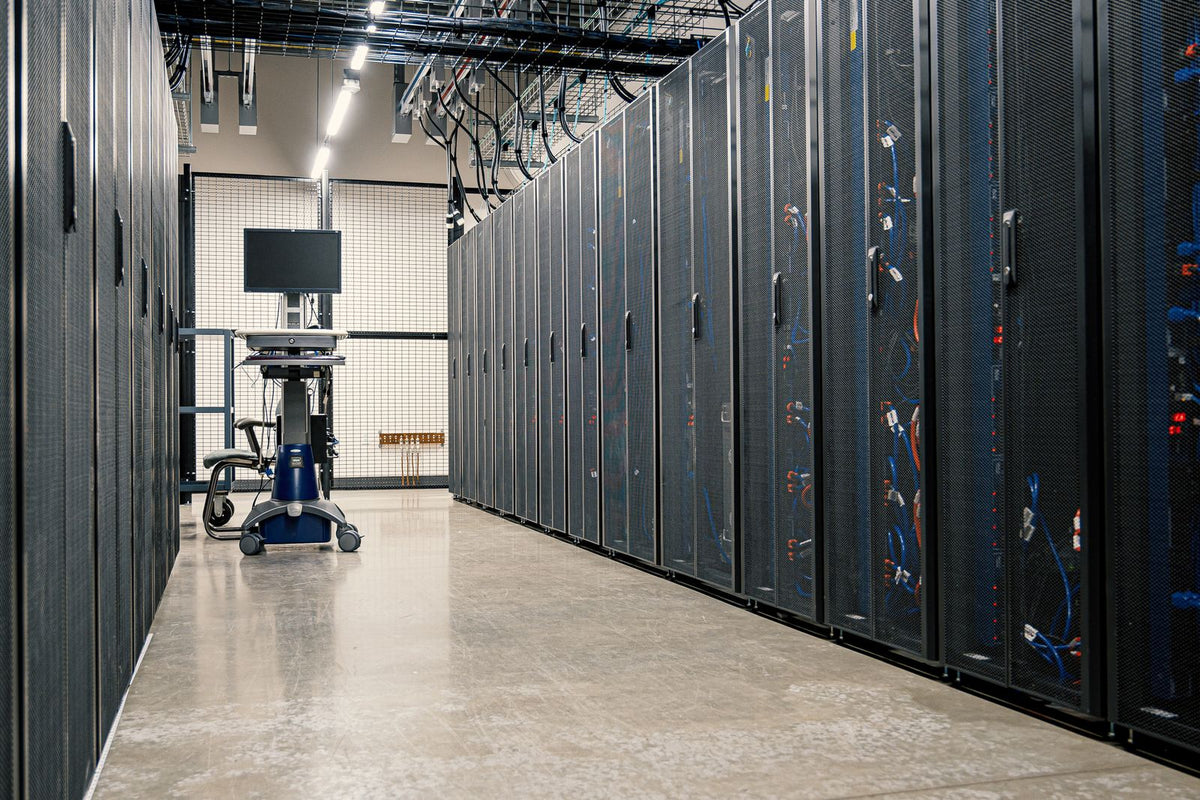
Photo: Brett Sayles / Pexels


شارك:
Before the Dispute: Mediation, Arbitration and Small Claims Options for SMEs in Qatar
Your Business Has a Credit File: How Qatar Credit Bureau Reports Shape SME Financing