Qatar now produces almost all of its own fresh poultry and dairy but less than half of its essential vegetables. The Ministry of Municipality is changing the rules to close that gap, and it is targeting smaller, more technical operators. On 26 October it halved the minimum size of a subdivided farm and said one aim was to attract investors with the technical and financial capacity to develop the land. For agritech founders and the SMEs that serve farms, this is a clear policy signal. Here is where the openings are, what holds farms back, and which support exists.
What changed this month
According to a Ministry of Municipality statement reported by QNA, the minimum area of a subdivided farm is now 50,000 square metres, down from 100,000. The ministry called it "a significant improvement over previous regulations." Its stated goals are to:
- expand agricultural investment and support small and medium-sized agricultural projects;
- attract new investors able to develop the subdivided land;
- increase the area in production while conserving groundwater;
- support domestic output and self-sufficiency targets.
Subdivided land must still be used for its designated agricultural purpose. In practice, a 5-hectare plot is a viable site for greenhouses, hydroponics or a specialist operation that would never have justified buying a 10-hectare farm.
Ten days earlier, ahead of World Food Day, the ministry set out its production priorities. The headline was a 30% increase in productivity from 96 hectares of sustainable, climate-controlled greenhouses, alongside smart irrigation, aquaculture technology, alternative energy and stronger biosecurity.
Where the gaps are
The ministry's figures show self-sufficiency of 99% for fresh poultry and dairy, 67% for fresh fish and 47% for essential vegetables in 2025. A Gulf Times report puts vegetable self-sufficiency at about 39% in 2024, so the trend is improving. It also reports that about 950 productive farms supplied local markets in 2025, with domestic vegetable production of about 75,000 tonnes.
Vegetables and fish are where demand is largely met by imports, and where a productivity gain matters most.
Six openings for agritech startups and SMEs
The ministry's own priorities point to these areas. How a startup fits each one is general guidance, not a government programme list.
-
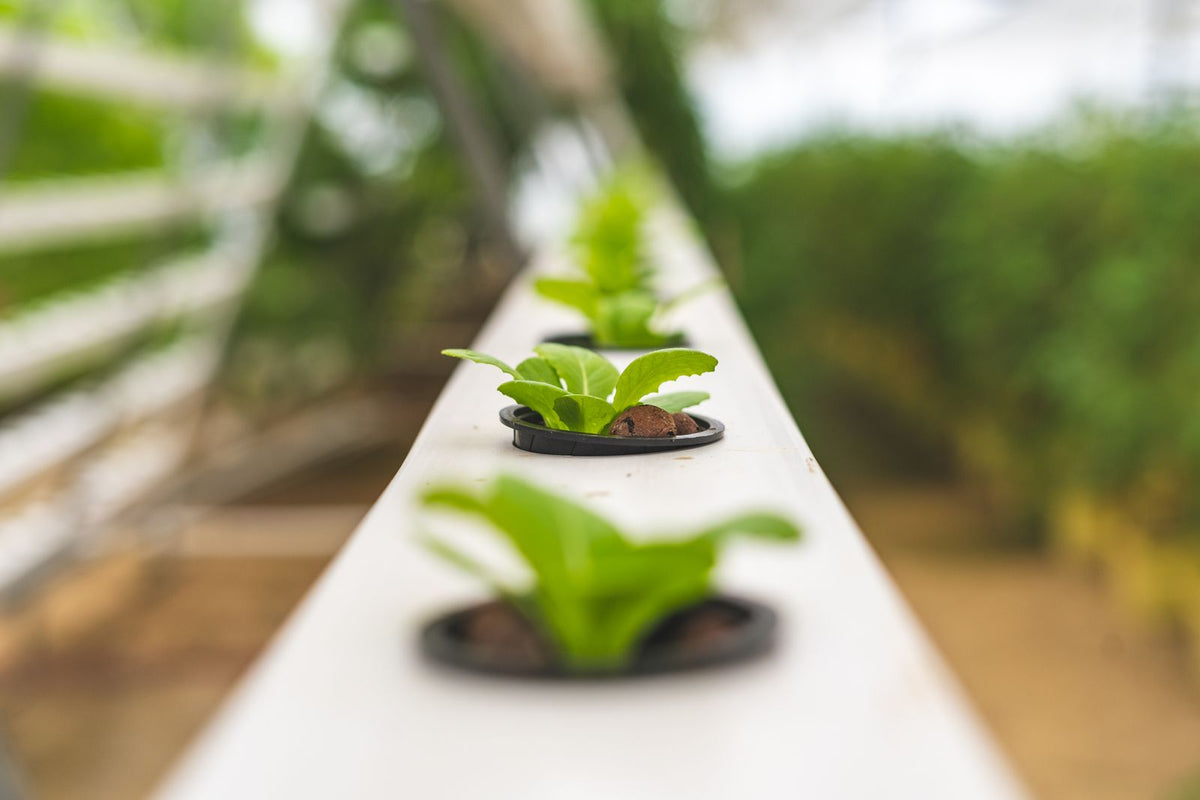
Protected agriculture and hydroponics. Greenhouse design, climate control, hydroponic and vertical systems. A Gulf Times feature on smart farms describes a local farm running more than 15 greenhouses and growing most of its cucumbers, tomatoes and leafy greens hydroponically.
-
Water and irrigation. Smart and automated irrigation, sensors and water-use monitoring. These matter because the ministry ties farm expansion directly to groundwater conservation.
-
Aquaculture. With fish at 67% self-sufficiency, the ministry names aquaculture technology as a priority.
-
Bio-inputs. The ministry reports that trials by its Agricultural Research Department using mycorrhizal fungi showed gains of up to 10% in plant growth and crop productivity compared with conventional methods, along with less reliance on chemical inputs.
-
Cold chain and food-loss reduction. The food security programme includes investment in cold-chain infrastructure and a national programme to reduce food loss and waste.
-
Farm data and services. AI-based crop monitoring, remote production monitoring and digital platforms. The ministry is also digitising project licensing and monitoring.
What holds farms back and how to sell to them
In the same Gulf Times feature, agricultural businessman Dr Rashid al-Kuwari named three barriers to adopting smart farming: high initial investment, relatively narrow profit margins in the local market, and too few specialised infrastructure and technical service providers.
Each barrier is a design brief. As general guidance for founders:
-
Lower the upfront cost. Leasing, equipment-as-a-service or revenue-share models can turn a capital purchase into an operating cost a farm can afford.
-
Sell on margin, not technology. Show the effect on yield per square metre, water per kilogram and spoilage. Farmers are already reducing input costs: the ministry's voucher scheme covers nearly 75% of the cost of seeds, fertilisers and pesticides for more than 400 farms, according to Gulf Times.
-
Bring the service, not just the kit. The shortage of technical providers means installation, maintenance and agronomy support are a business in themselves, and often a better first product than hardware.
-
Design for heat and water. Solutions built for temperate markets often struggle with Qatar's climate. Local testing is a selling point.
Funding and support routes
-
QDB Pre-Accelerator. Agritech is one of the sectors listed for QDB's 2026 programme. MENA Startup Digest reports that it is free, and that selected startups can pitch for up to US$75,000 for 6% equity. The 2026 cohort runs from 5 October to 25 November and applications have closed, so watch for the next intake.
-
QDB food-sector programmes. In March 2026 QDB activated financing and advisory programmes for companies and factories in the food and health sectors, with the Ministry of Municipality and other ministries. Ask QDB directly about terms.
-
Farm partners. The voucher scheme and seasonal markets mean productive farms are an organised, reachable customer base, and often the best pilot partners.
The Vision 2030 connection
The ministry links the farm subdivision change directly to food security under Qatar National Vision 2030. The National Food Security Strategy 2030, launched by the Prime Minister, rests on three pillars: domestic production using modern, sustainable technologies; strategic reserves and early warning; and diversified external sources. Agritech fits the first pillar directly. It also supports NDS3's aims of growing the private sector and diversifying the economy, and Startup Qatar's push for deep-tech companies that solve local problems and can then export the solution to other hot, water-scarce markets.
What to do next
- Pick one gap, such as vegetables, fish or water efficiency, and build your pitch around a measurable improvement.
- Secure a pilot with a productive farm before raising; local proof in Qatar's climate is your strongest asset.
- Price for thin margins: offer leasing, subscription or performance-based models.
- If you are an investor or SME owner, look at subdivided 5-hectare plots as sites for protected agriculture.
- Track QDB's next pre-accelerator intake and ask QDB about its food-sector programmes.
Sources
- Ministry of Municipality adopts new regulations for subdivision of farms (26 Oct 2026) – The Peninsula / QNA – thepeninsulaqatar.com
- Qatar targets 30% rise in agricultural productivity (16 Oct 2026) – The Peninsula – thepeninsulaqatar.com
- Qatar targets sustainable food production as self-sufficiency reaches 99% for fresh poultry and dairy (15 Oct 2026) – Qatar Tribune / QNA – qatar-tribune.com
- Voucher scheme to help local farmers gets digital upgrade (3 Oct 2026) – Gulf Times – gulf-times.com
- Smart farms seen as key to next phase of food security (8 Sep 2026) – Gulf Times – gulf-times.com
- Qatar Development Bank opens applications for 2026 Pre-Accelerator Program (Jul 2026) – MENA Startup Digest – menastartupdigest.com
- QDB activates financing, advisory programmes for food and health sectors (18 Mar 2026) – Qatar Tribune – qatar-tribune.com
- Prime Minister launches the National Food Security Strategy 2030 – Government Communications Office – gco.gov.qa
- Qatar National Vision 2030 – Government Communications Office – gco.gov.qa
Photo: Pragyan Bezbaruah / Pexels


شارك:
Own Your Name: A Founder's Guide to Trademarks, Copyright and Patents in Qatar
From Doha to Riyadh: A Qatari Startup's Guide to Entering Saudi Arabia