

From Wounds to Water: What Grapheal's Pivot Teaches Deep-Tech Founders About Markets
- by Falak
Most deep-tech companies don't fail because the science is wrong. They fail because the science never finds a buyer who will pay for it at scale. Grapheal, a French graphene-sensor company now in the QSTP x TotalEnergies WaterTech Accelerator, is a useful case because it has already changed markets once, from wound care to water, and is now adapting its product for Qatar. Its story, told by co-founder and CEO Vincent Bouchiat in a QSTP interview published on 3 November 2026, shows how a platform technology gets matched to a market, and what it takes to turn a pilot in Qatar into a contract.
A note on sources: this case study draws on a single founder interview. Grapheal has not published revenue, funding or named pilot customers, so the lessons below stay at the level of what the founder describes, and the general guidance is labelled as such.
Bouchiat spent most of his career as a CNRS physicist in Grenoble working on quantum electronics and nanostructures. His team developed a way to produce monolayer graphene at large scale with an easily scalable process, which makes low-cost sensors possible using flexible and printed electronics. He founded Grapheal in 2019.
The turning point, he says, came when the team began placing living cells on graphene. His question changed "from 'how does this material behave?' to 'who needs this?'" The first answer was wound care, where nurses still judge healing by eye. During the Covid-19 pandemic the team built a sensor to track viral infections in the field. Then came the unexpected step: the same chip that reads a wound could read a glass of water. Grapheal's water work is about three years old.
The lesson is not "pivot often". It is that a platform technology has several possible markets, and the founder's job is to keep asking which one has a buyer with an urgent, paid problem. Research by Hello Tomorrow and BCG, based on a survey of about 400 deep-tech startups, found that 14% named "yet-to-be-developed commercial applications" as a key challenge, alongside long time-to-market (27%), high capital intensity (25%) and technology risk (17%) (From Tech to Deep Tech). Finding the application is part of the work, not something that happens after it.
Grapheal's water product targets PFAS, very stable chemicals that Bouchiat says are slowly building up in ecosystems and accumulate in mammals, including humans. Tracking them today means freezing samples and sending them to a central lab, with a typical wait of two to three weeks. Grapheal's portable method, PFAST, gives results on site in under 45 minutes and at a fraction of the cost. For pathogens, the comparison is a 24-hour lab incubation culture.
Bouchiat is open about the limitation: PFAST is not yet as precise as the reference laboratory method. Its value is fast field data that fills a gap, not a replacement for the lab. That framing is worth copying.
The most useful line in the interview for founders entering Qatar is this: "In Europe, regulation pulls water sensors into the market. In Qatar, water security does." The same product is bought for a different reason, so the pitch, the evidence and the buyer change too.
Bouchiat describes Qatar's customers as a few large public players, such as the water utility, the public works authority and industry, who buy through pilots, relationships and local presence. During the accelerator's Doha Immersion Week, founders met representatives of Earthna, Kahramaa and Ashghal and visited the QEERI Water Center, according to QSTP's 5 November 2026 announcement of the final showcase for the cohort of 11 growth-stage startups.
Conditions matter as much as buyers. Heat near 50°C, humidity and dust mean Grapheal's sensors need temperature compensation and rugged housings. Water type matters too: seawater, drinking water and industrial wastewater all affect how a sensor behaves, so the company built a microfluidic washing method so the sensor can work in heavy matrices such as brine, sludge and leachate. Bouchiat says Grapheal is adapting the product rather than transplanting a European one, and expects that to make it stronger everywhere.
Inside the accelerator, Grapheal is proposing several kinds of pilot depending on the partner: calibrating sensors for regional conditions with research labs, offering agrifood companies a simple way to check water purity, and supporting water reuse. Bouchiat is specific about what turns a field test into a regional network:
As general guidance for deep-tech founders, that list doubles as a pilot design checklist. Agree the reference method and the comparison protocol before the pilot starts, fix the success criteria in writing, plan for local data hosting, and budget for the pilot to run for months, not weeks. For more on structuring pilots with large buyers, see our guides From Challenge to Paid Pilot and Talk to Users Before You Build.
Environmental Development is the fourth pillar of Qatar National Vision 2030, and the Government Communications Office lists the Third National Development Strategy (2024–2030) as the current phase for delivering it. Among the progress indicators GCO highlights is that Qatar treats 99.7% of its wastewater. That makes water reuse and treatment monitoring a natural home for sensor startups, which is exactly where Grapheal is aiming. Bouchiat puts it directly: "Water safety is at the core of the Qatar 2030 goals."
For founders, the wider point is that national priorities shape who buys. In a market where demand comes from water security, the strongest pitch shows how a technology helps public operators protect a strategic asset, not how it meets a foreign regulation. Our earlier piece on Qatar's cooling, water and heat-resilience economy maps more of these openings.
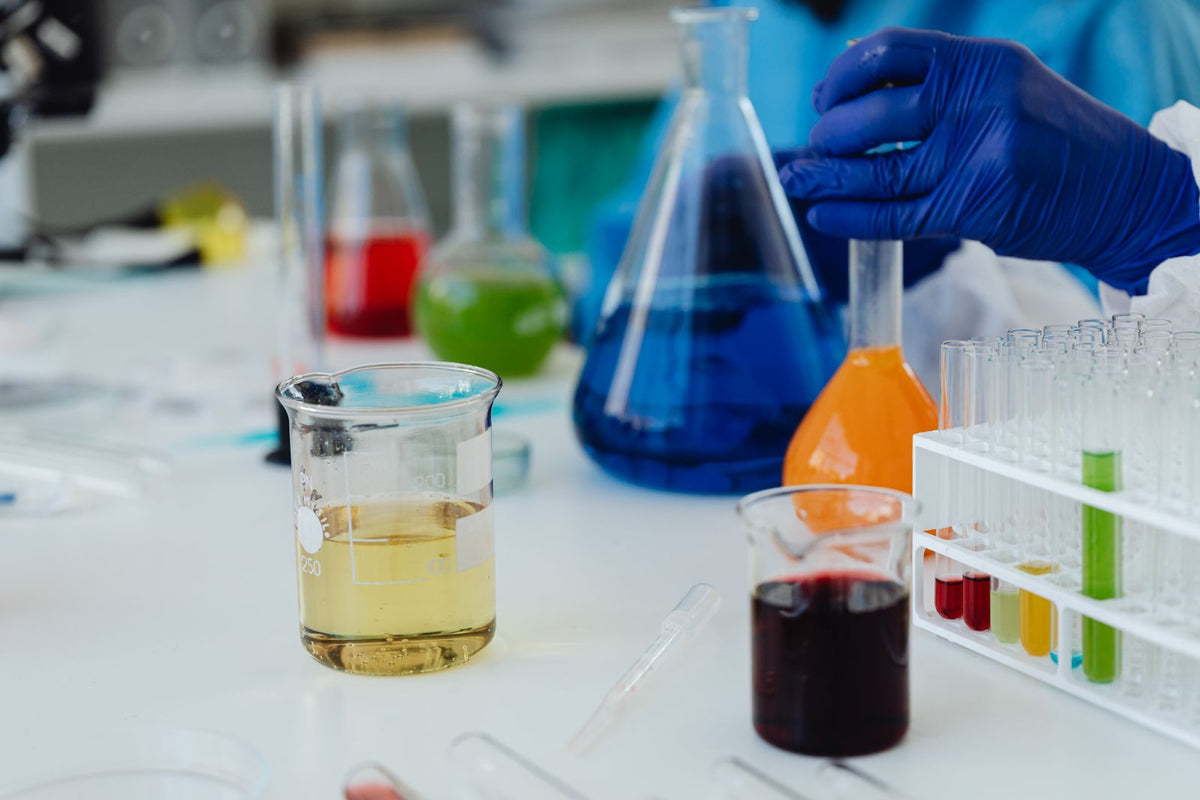
Photo: Karola G (Kaboompics) / Pexels
Share:
A Minimum Viable Brand: Purpose, Positioning and Voice for Qatar Startups on a Budget
A Third of the Value: How Qatar B2B Startups Should Price Their First Contracts