

NDS3 Nears Its Midpoint: Qatar's 2030 Targets and Where That Leaves Founders
- by Falak
Qatar's Third National Development Strategy (NDS3) runs from 2024 to 2030, and it is nearly halfway through. Unlike most strategy documents, it comes with numbers: a growth rate, an FDI figure, a visitor count, a share of Qataris working in the private sector. That makes it something founders and investors rarely get from government — a scorecard. Set each target against the latest official data, and you can see where the economy is on track, where it is behind, and so where policy attention, procurement and incentives are most likely to flow over the next four years.
NDS3 is the delivery plan for the final stretch of Qatar National Vision 2030, launched in January 2024. Its headline national targets, as summarised by Invest Qatar and the launch coverage, are:
Below the national level sit cluster targets. Invest Qatar lists three that matter directly to SMEs: tourism (6 million visitors a year, QAR 34 billion in in-destination spending and 19 million room nights by 2030), logistics (6.6% annual GDP growth in the sector and QAR 25 billion in re-exports) and manufacturing (a top-40 place on the Competitive Industrial Performance Index, with a focus on chemicals and low-carbon metals).
Growth: below target, with a 2026 shock. Real growth was 2.4% in 2024, according to Oxford Business Group's Qatar 2026 report. The Qatar Central Bank's 2025 macroeconomic report put full-year 2025 growth at 2.9%, with the non-oil economy up 4.8% (ANBA, August 2026). Then came the regional disruption. National Planning Council figures for Q1 2026 show total real GDP down 7.0% year on year, driven by a 25.8% fall in hydrocarbon output (QNA, 31 August 2026). The 4% average is now a stretch. The headline number hides the more useful signal for founders, which is the next point.
Diversification: the strongest result so far. In the same quarter that hydrocarbons fell sharply, non-hydrocarbon GDP grew 3.5%. Wholesale and retail trade grew 9.0%, construction 6.2%, real estate 6.1% and financial and insurance activities 4.8% (NPC via QNA). The QCB Governor said in September that the non-hydrocarbon economy now makes up nearly 70% of GDP, up from 40% in 2011 (Arab News, 21 September 2026).
FDI: momentum is building, but the gap is large. Invest Qatar reports US$3.4 billion in FDI capital expenditure in 2025, across 373 projects (up 52% from 245) and creating 15,051 jobs. Consumer products, business services, food and beverages, software and IT services, and textiles accounted for 69% of projects (Invest Qatar, July 2026). Greenfield project spending and the NDS3 FDI figure are not measured the same way, so the two numbers should not be divided into a percentage. Even so, the direction is clear: the US$100 billion goal needs a much faster pace of large inbound deals.
Business environment: one target arguably met. Qatar entered the top 10 of the IMD World Competitiveness ranking for the first time and rose 21 places to 12th on the fDi Intelligence Greenfield FDI Performance Index (Invest Qatar).
Tourism: close on visitors, further on spend. Qatar welcomed 5.1 million visitors in 2025, up 3.7%, and sold 10.8 million room nights, up 8.6% (Qatar Tourism via QNA, January 2026). The visitor target is within reach. The room-night target of 19 million is not yet, which points to a need for longer stays and more reasons to stay.
Qatari private-sector participation: approaching target. Oxford Business Group puts the share of Qataris working in the private sector at 17%, against the target of more than 20%. The report does not give a date for that figure, so treat it as indicative.
No up-to-date official figure for R&D intensity or the skilled-worker share was available in the sources reviewed, so those targets are not scored here.
A gap against a national target usually means more policy support, more procurement and more patient capital in that area. Reading the scorecard that way:
The following is general guidance, not Qatar-specific fact. Strategy targets are most useful when they shape how you position a business, not when they are quoted in a pitch deck. When a pitch names a national target, investors and government programmes will check whether the business actually moves that number. A tourism startup that can show extra nights or extra spend per visitor is more credible than one that simply cites "Vision 2030". The same applies to procurement. Buyers with national-target responsibilities can only justify a contract that improves their own scorecard.
Track the official releases yourself, too. The NPC publishes quarterly GDP by sector, Invest Qatar publishes annual FDI results and Qatar Tourism publishes performance reports. A sector that keeps growing faster than the economy, as trade, construction and financial services did in Q1 2026, is telling you where customers have budget.
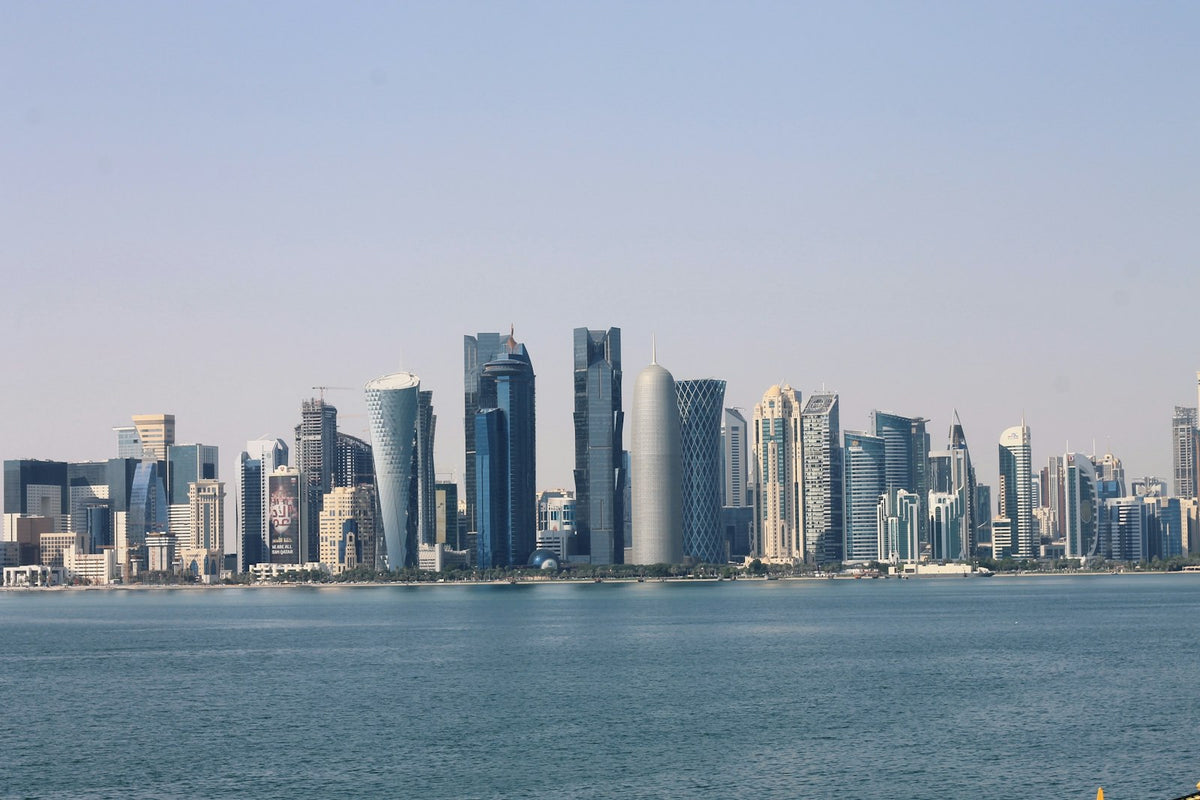
Photo: Rhiannon Elliott / Unsplash
Share:
The Growing Season Opens: Why Qatar's Idle Farms Are an Opening for Agri-Food SMEs
Hiring Your First Ten in Qatar: What the 2026 Labour Law and WPS Changes Mean for Startups