

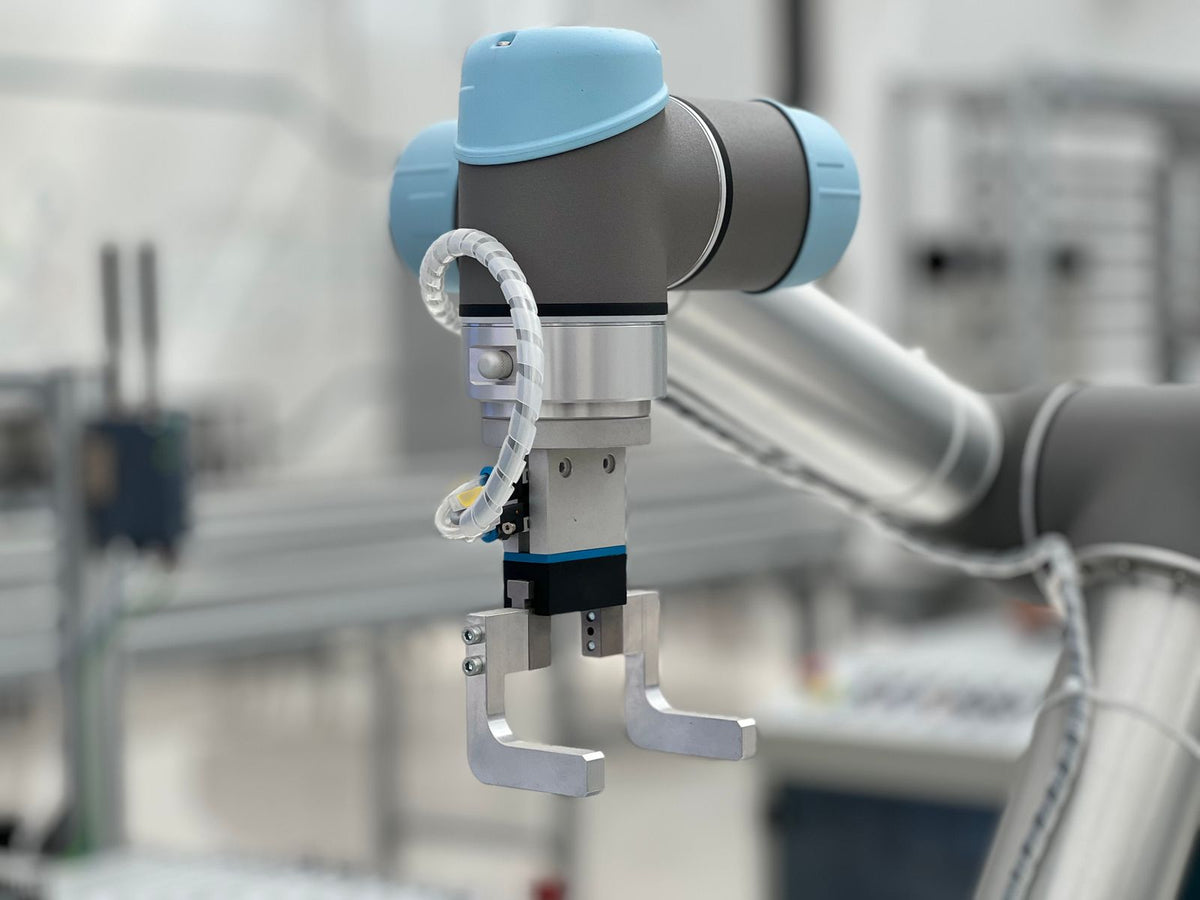
After ROBOTECH 26: A Robotics Pilot Checklist for Qatari SMEs
- by Falak
This week, Doha is hosting ROBOTECH 26, its first international exhibition dedicated to robotics and AI. For many SME owners it is the first time they can see warehouse robots, service robots and robotic arms working up close and talk to the companies selling them. That is useful, but a good demonstration is not a business case. The SMEs that get value from automation are the ones that leave the exhibition with one clearly defined process, a short pilot plan and a payback number, not a brochure and a quotation. This checklist is for them.
ROBOTECH, the International Exhibition on Robotics and Artificial Intelligence Technologies, runs from 27 to 29 October 2026 in Doha across 15,000 square metres. It is organised by Stallion with Qatar Chamber as official supporter, and Qatar Chamber says it covers healthcare, smart transportation, logistics, education, cybersecurity, food security, fintech, industrial technologies, smart cities and environmental conservation. The Chamber links the event to Qatar's Digital Agenda 2030, and its Qatar Business Council is running sessions and workshops to connect Qatari business owners with international exhibitors.
The organiser is clear about who it sees as the main beneficiaries. Stallion's general manager, Haitham Shehab, told Gulf Times that "the most immediate opportunity lies with Qatari SMEs and startups," and that international companies are actively looking for local partners.
Robots are no longer only for car plants. The International Federation of Robotics (IFR) reports that more than 600,000 industrial robots were installed in 2025, up 11%, taking the operational stock to about five million. More relevant for most SMEs is the growth of professional service robots, which work in warehouses, hotels, hospitals and buildings. According to IFR figures reported by DC Velocity, nearly 250,000 were sold in 2025, up 24%. Transportation and logistics accounted for 47% of sales, followed by hospitality and professional cleaning. The IFR also notes that Robots-as-a-Service (RaaS), where you pay a subscription instead of buying the machine, has become the leading business model in the United States.
For a Qatari SME, those trends point to where off-the-shelf solutions are most mature: moving goods inside a warehouse or kitchen, cleaning large floor areas, guiding visitors, and simple, repetitive pick-and-place work.
The following is general guidance, not specific to any vendor or programme. Start with a single process and describe it in numbers before you speak to vendors. A good candidate for a first robotics pilot is usually:
Examples include moving stock between storage and packing in a warehouse, floor cleaning in a mall or clinic, dish or tray return in a large F&B operation, or packing and palletising in a small factory. Write down the current baseline: hours per week, cost per hour including allowances and housing, error rate and any downtime.
A pilot should answer one question: does this work, in our space, with our staff, at the cost we expect? As general practice:
A simple payback calculation is enough for a first decision: total cost divided by annual net savings. The common mistake is to undercount cost. Include:
On the savings side, count only what you can measure in the pilot: hours redeployed, fewer errors, less overtime, more throughput. If payback depends on savings you cannot see in the pilot data, treat the business case as unproven.
An April 2026 OECD study of SME technology adoption in the United Kingdom names cost, perceived relevance and trust in technology vendors as key barriers, and finds that robotics and automation are more limited in deployment than mature digital tools such as cloud computing. Contract terms can address the trust problem directly. Ask for:
Qatar's Third National Development Strategy targets average labour productivity growth of 2% a year, according to Invest Qatar, and sets targets for its logistics and manufacturing clusters, two sectors where automation is directly relevant. Qatar Chamber positions ROBOTECH within the Digital Agenda 2030. For SMEs, well-run automation pilots are a practical way to contribute: they lift output per worker, reduce reliance on hard-to-fill manual roles and build local know-how. There is also a supplier opportunity. Shehab's point that international firms want local partners means Qatari SMEs and startups can position themselves as integrators, maintenance providers or distributors, not only as buyers.
Photo: KJ Brix / Pexels
Share:
Your First Five Hires in Qatar: Contracts, Probation, WPS and Gratuity for Founders
Not Just a Transit Point: Logistics and Re-Export Openings for SMEs in Qatar's Free Zones