

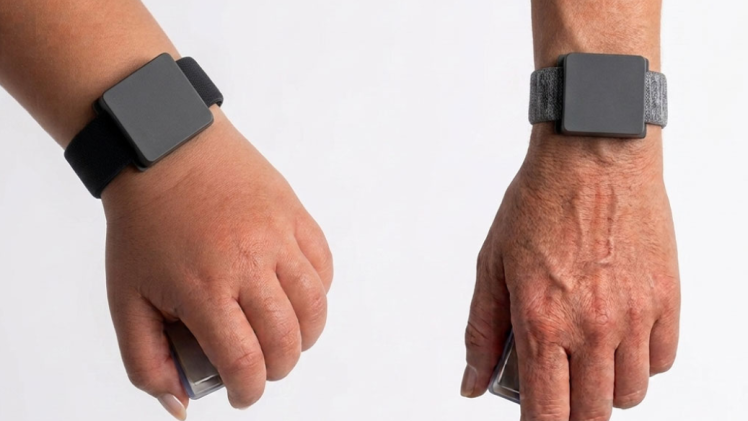
Qatar University develops AI powered Smart Bracelet for Glucose Monitoring
- by Falak .
Doha, Qatar - Researchers at Qatar University have developed GlucoWatch, an artificial intelligence-powered wearable designed to estimate blood glucose levels without the need for finger-prick blood tests. Combining advanced biosensing, machine learning and Internet of Things (IoT) technologies, the smart wristband provides real-time glucose estimates and severity alerts, offering a promising step towards more comfortable and accessible diabetes management.
The project was led by Dr. Khalid Abualsaud, Associate Professor in the Department of Computer Science and Engineering at Qatar University, alongside a multidisciplinary team of researchers from the University's College of Engineering. The innovation reflects Qatar University's growing focus on AI-driven digital health technologies that can improve disease monitoring and patient care.

Dr. Khalid Abualsaud, lead researcher and creator of GlucoWatch at Qatar University
Diabetes remains one of the world's fastest-growing chronic diseases, affecting more than 537 million adults globally, according to the International Diabetes Federation. Effective diabetes management depends on frequent blood glucose monitoring, yet many patients find traditional finger-prick testing uncomfortable, inconvenient and difficult to maintain over the long term.
GlucoWatch was developed to help overcome these challenges by providing a non-invasive alternative that allows users to monitor their glucose levels more comfortably while reducing the burden of repeated blood sampling.
Rather than drawing blood, GlucoWatch uses photoplethysmography (PPG); an optical sensing technology commonly found in smartwatches to measure changes in blood flow beneath the skin. The system combines these signals with blood pressure measurements and demographic information before processing the data using advanced machine learning algorithms.
The researchers extracted hundreds of physiological features from the collected signals, enabling the AI models to estimate blood glucose levels with a high degree of accuracy. Unlike traditional glucose monitors, the system performs this analysis entirely through wearable sensing, making continuous monitoring significantly less intrusive.
The wearable is connected to an Android mobile application through a cloud-based IoT platform hosted on Amazon Web Services. Every 10 seconds, physiological data is transmitted from the wristband to the application, where artificial intelligence analyses the information and updates the user's estimated glucose level in real time.
In addition to estimating glucose levels, the platform categorises readings into normal, warning and dangerous ranges. If abnormal glucose levels are detected, users receive immediate notifications, enabling them to take timely action and potentially reduce the risk of complications associated with hyperglycaemia or hypoglycaemia.
The research involved 139 participants, including both diabetic and non-diabetic volunteers, whose physiological data were collected to train and evaluate the machine learning models. The study found that the best-performing algorithm achieved a correlation coefficient of 0.90 when estimating blood glucose levels, while clinical evaluation using the Clarke Error Grid placed all predictions within the clinically acceptable Zones A and B.
For glucose severity classification, the AI achieved an accuracy of 98.12%, demonstrating the technology's strong potential for identifying clinically relevant glucose conditions in real time. While further large-scale clinical validation will be required before commercial deployment, the results represent a significant milestone in non-invasive glucose monitoring research.
The project was co-led by Dr. Khalid Abualsaud and Professor Muhammad E. H. Chowdhury, with contributions from researchers Elias Yaacoub, Md Nazmul Islam Shuzan, Moajjem Hossain Chowdhury, Md Ahasan Atick Faisal, Mazun Alshahwani, Noora Al Bordeni, Fatima Al-Kaabi, Sara Al-Mohannadi, Sakib Mahmud, and Nizar Zorba. The research was conducted through Qatar University's Departments of Computer Science and Engineering and Electrical Engineering, with support from the Qatar National Research Fund and Qatar National Library.
GlucoWatch represents a broader shift towards intelligent, wearable healthcare technologies that combine artificial intelligence with physiological sensing to support personalised medicine. As research in wearable AI continues to advance, these systems could enable earlier detection of health changes, improve remote patient monitoring and reduce reliance on invasive diagnostic methods.
For people living with diabetes, innovations such as GlucoWatch could eventually provide a more convenient way to monitor their condition, helping patients and healthcare professionals make informed decisions based on continuous, real-time data. While additional clinical trials and regulatory approvals will be needed before the technology reaches widespread use, the project highlights Qatar University's growing contribution to AI-powered healthcare innovation and the development of next-generation wearable medical technologies.
Share:
Startup Grind Doha, OSRN Launch Yalla Startups
Scale Now Spotlight Series: 5 Qatari Tech Companies Driving the Next Wave of Innovation