

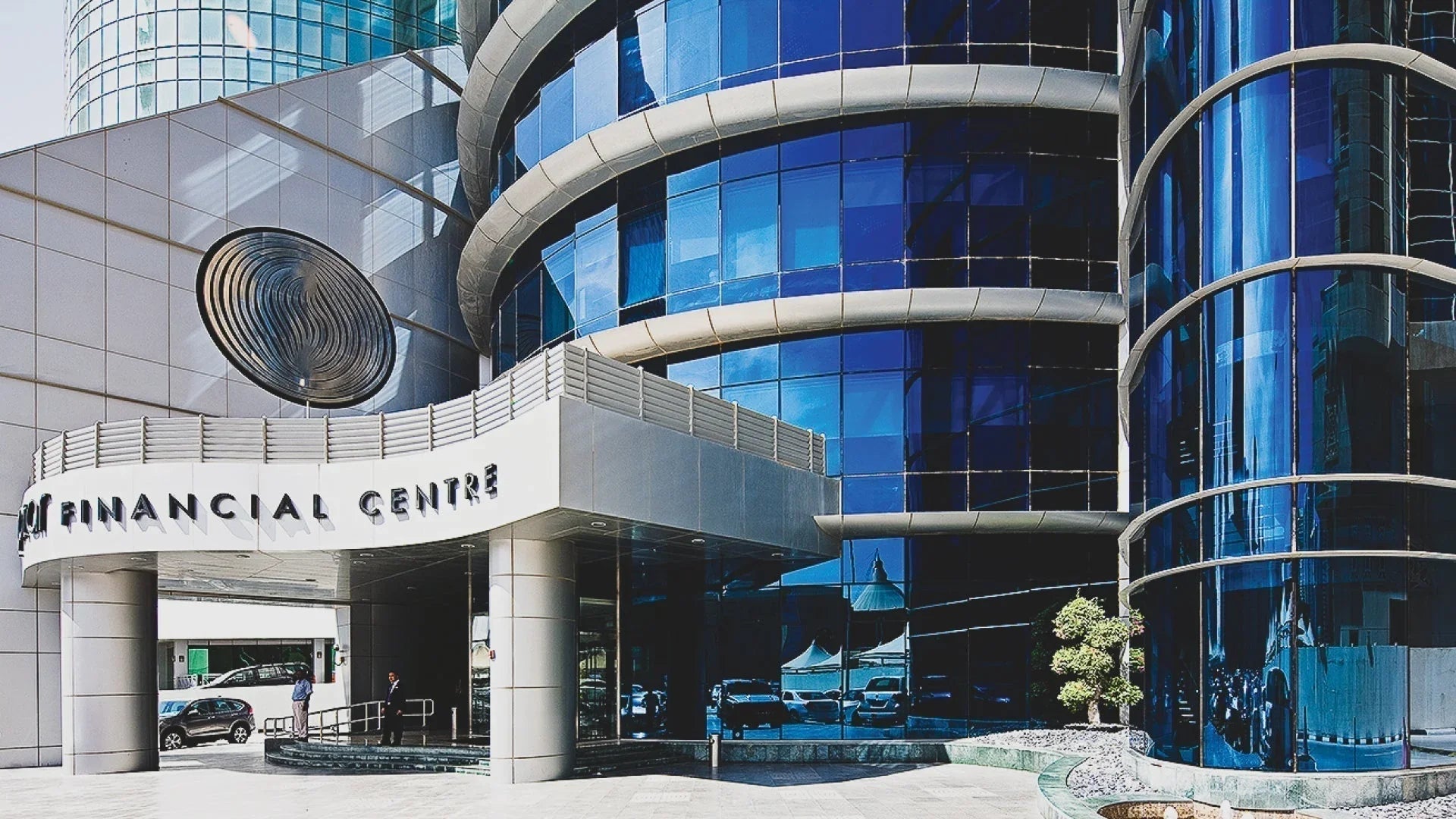
QFC Contributes $4.8 Billion to Qatar’s Economy
- by Falak .
Doha, Qatar - Qatar Financial Centre’s economic footprint continued to expand in 2024, with a new economic impact assessment showing that the platform contributed USD 4.792 billion to Qatar’s gross value added and supported 44,178 jobs across the national economy.
The findings, published in the Qatar Financial Centre Economic Impact Assessment Report, underline QFC’s growing role as a key driver of Qatar’s non-oil economy, particularly across financial services, professional services, consultancy, digital activities and holding company structures.
The report, issued in May 2026 and based on 2024 data, measures QFC’s contribution through direct, indirect and induced economic effects. These include the value created directly by QFC-registered firms and entities, the supply-chain activity generated through local spending, and the wider impact of employee expenditure in the economy.
According to the report, QFC’s total GVA contribution reached USD 4.792 billion in 2024, representing around 2.2% of Qatar’s total GDP and 3.5% of Qatar’s non-oil GDP.
This marks a 13% increase in QFC’s GVA impact compared with 2022, reflecting the platform’s continued expansion and its increasing importance within Qatar’s broader economic diversification agenda.
The report notes that QFC’s contribution is likely understated, as the analysis was based on the financial statements available at the time of the study. Out of 2,947 gross registered companies, the assessment covered 979 companies with available financial data.
QFC’s activities supported 44,178 jobs in Qatar in 2024. Of these, 11,600 were direct jobs, while 27,431 were supported through indirect supply-chain activity. A further 5,147 jobs were supported through induced effects, such as employee spending on housing, education and other domestic services.
The total employment impact increased by 34% compared with 2022, showing that QFC’s growth is not limited to company registrations or financial contribution, but also extends to job creation and wider labour market activity.
The report identifies four sectors as the largest contributors to QFC’s total GVA impact: holding companies, consultancy, digital, and other professional services.
Holding companies generated the largest impact at USD 1.545 billion, followed by consultancy at USD 744 million, digital at USD 484 million, and other professional services at USD 463 million.
These figures show the increasingly diversified nature of QFC’s platform. While financial services remain central to its identity, non-regulated sectors such as consultancy, digital and professional services are playing a major role in expanding QFC’s contribution to Qatar’s economy.
QFC also recorded significant company growth in 2024. The report shows that 836 new companies were registered during the year, bringing the total number of gross registered companies to 2,947 by the end of 2024.
The vast majority of newly registered firms were non-regulated companies, with 827 out of the 836 new registrations falling under non-regulated sectors. Overall, non-regulated companies accounted for 96% of QFC’s registered company base in 2024.
This aligns with QFC’s broader development from a primarily financial services platform into a wider business and investment hub supporting multiple sectors, including digital, media, sports, consultancy and professional services.
QFC companies included in the assessment held USD 41.565 billion in assets and generated nearly USD 5.771 billion in revenues in 2024.
Corporate banks represented the largest share of reported assets, followed by holding companies. In revenue terms, holding companies accounted for the largest share, followed by corporate banks, consultancy and digital firms.
These figures highlight the scale of business activity taking place through the QFC platform and its role in attracting both local and international companies to operate from Qatar.
The report breaks down QFC’s total GVA contribution into three categories.
Direct GVA impact reached USD 2.177 billion, reflecting the value created directly by QFC entities and companies. Indirect GVA impact reached USD 2.182 billion, showing the contribution generated through local supply-chain spending. Induced GVA impact stood at USD 433 million, reflecting the wider economic activity created by employee spending.
The near-equal scale of direct and indirect impact suggests that QFC’s role extends beyond the firms registered on its platform. Its activities also generate significant demand for local suppliers, service providers and supporting industries.
Since its establishment in 2005, QFC has evolved from a platform focused mainly on international banks and insurance companies into a broader business and financial centre. Its current role includes supporting foreign direct investment, enabling knowledge transfer, and providing a legal and regulatory environment for companies looking to operate in Qatar and the wider region.
The latest findings reinforce QFC’s position as an important contributor to Qatar’s economic diversification efforts. By supporting financial services, professional services, digital firms and investment-related structures, QFC is helping expand the country’s private sector base and strengthen its non-oil economy.
The report notes that its findings are based on available company financial statements, meaning the total impact may be higher if all registered companies were included.
It also uses an input-output economic model to estimate indirect and induced impacts. While this is a standard approach for economic impact assessments, the model relies on assumptions about supplier linkages, consumption patterns and sector relationships.
Despite these limitations, the report provides a detailed picture of QFC’s expanding economic role and its growing contribution to jobs, business activity and national value creation.
The 2024 QFC Economic Impact Assessment shows a platform that is growing in both scale and significance. With USD 4.792 billion in total GVA contribution, 44,178 jobs supported, USD 41.565 billion in company assets and 836 new firms registered during the year, QFC continues to strengthen its role as a major contributor to Qatar’s non-oil economy.
The report also points to a wider shift in QFC’s economic profile. While financial services remain important, much of the platform’s growth and impact is now being driven by non-regulated sectors such as consultancy, digital services, holding companies and professional services.
As Qatar continues to focus on economic diversification, investment attraction and private-sector development, QFC’s expanding footprint positions it as one of the country’s key platforms for business growth and international connectivity.

Share:
AI Fintech GRO Relocates to Doha Following Qatari Backing
QSTP Opens Applications for Stars of Science Season 18